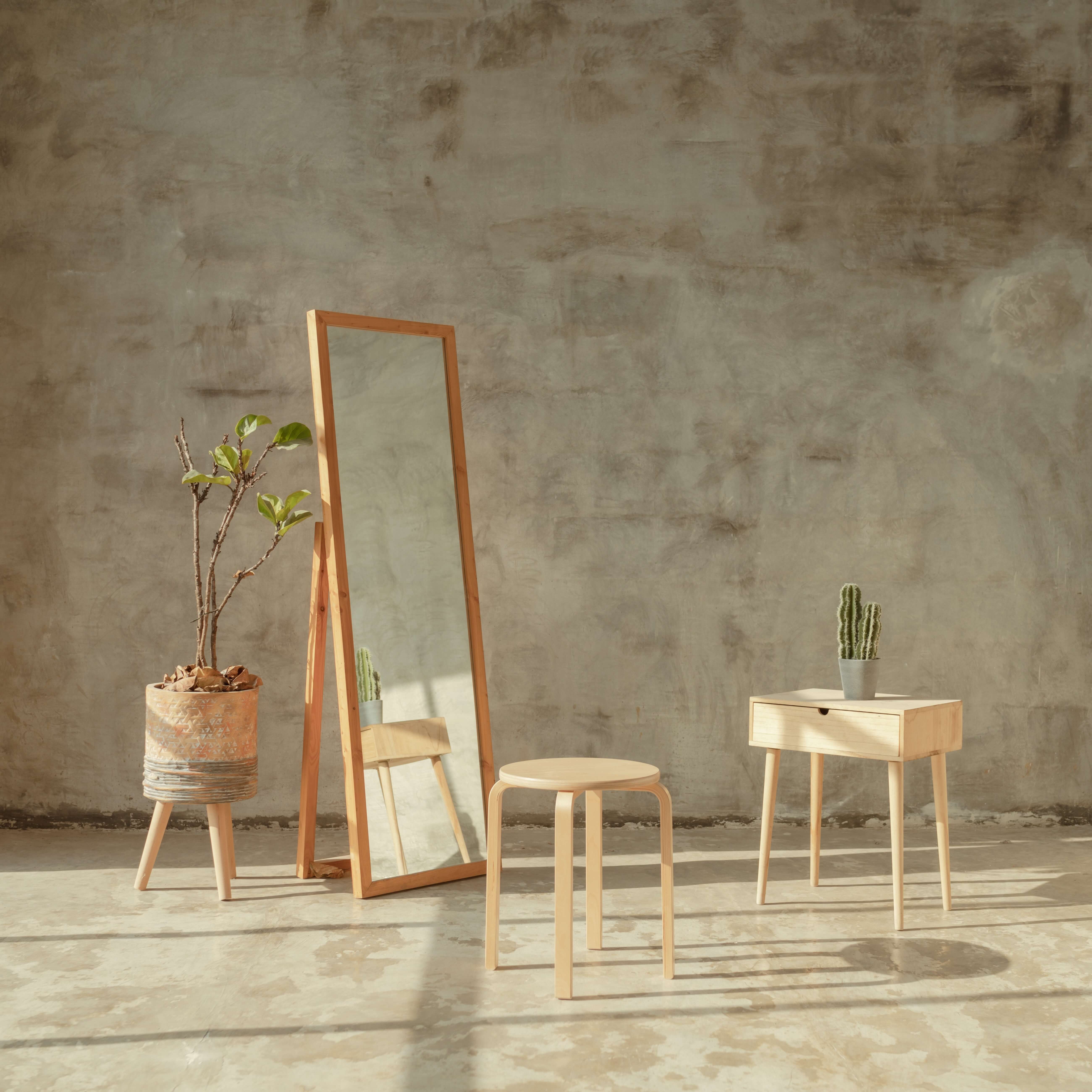
"The Ultimate Guide to Choosing Wabi Sabi Furniture"
Explore the finest handcrafted furniture and home décor at Kernig Krafts Jodhpur. Discover unique Wabi Sabi furniture, traditional craftsmanship, and timeless designs that bring authenticity and style to your home. Visit Our Furniture Page and shop now!
WABI SABI is an ancient Japanese philosophy that finds contentment in the imperfect, the transient, and the quietly commonplace.
In the realm of interior design, it prioritizes unadorned simplicity, organic materials, and a weathered warmth that tells the story of time.
Rather than conceal faults, WABI SABI allows them to emerge, revealing a subtler and more authentic kind of beauty that a perfect finish can never achieve.
This guide will unpack the subtleties of WABI SABI interior design, illustrating how to make deliberate furniture selections and tracing the aesthetic's soft ascent in places like Bangalore.
We will also wander through a few WABI SABI-inspired restaurants and consider lighting selections that deepen the effect, offering a comprehensive roadmap for inviting this tranquil, unshowy beauty into everyday life.
What is Wabi Sabi?
Wabi Sabi denotes an aesthetic tradition from Japan that discovers beauty in the uneven, the transient, and the aging of materials.
It is attentive to natural surfaces and the slow passage of the seasons, celebrating the rough-hewn, the uneven, and the politely worn.
In places touched by Wabi Sabi, ostentatious luxury is absent; instead, there is a quiet glow of surfaces that have been shaped by time and modest human care, an appeal that invites the viewer to see authenticity rather than flawless polish.
This sensibility extends to furniture, architecture, ceramics, and even the deliberate arrangement of food.
Each form is valued for its quiet integrity and modest presence.
The Philosophy Behind Wabi Sabi
Wabi Sabi draws its philosophical ground from Zen Buddhist thought. It acknowledges the natural cycles of coming to be, abiding, and passing away.
By celebrating the way materials gracefully age and how living things decay, the tradition encourages us to accept our transience and to loosen the clutch of perfectionism.
In the presence of Wabi Sabi, the present moment becomes worthy of attention, and the beauty of a single, irregular plate, a greyed garden fence, or the bloom of a late-season flower is seen as a quiet, treasured invitation to awareness.
Within the discipline of interior design, Wabi Sabi offers a thoughtful counterpoint to the overly pristine and antiseptic aesthetic that characterizes many contemporary residences.
Rather than concealing the passage of time, this philosophy invites artifacts that bear the marks of history—objects that have matured with grace and that resonate with a quiet, imperfect beauty.
Wabi Sabi Interior Design
Wabi Sabi interior design seeks to mirror the unadorned elegance of the natural world.
It welcomes blemished surfaces, soft-muted palettes, and a restraint that elevates the essential.
Within a space guided by this ethos, the air feels still and contemplative, and each deliberately chosen piece resonates with a quiet narrative of time and human care.
Key Principles of Wabi Sabi Interior Aesthetics
Honor the Flawed:
Wabi Sabi interiors celebrate the visible scars of use. A chipped bowl, a frayed textile, or a beam that has weathered decades becomes a revered presence rather than a hidden blemish.
Prioritize Natural Materials:
Materials that weather beautifully—timber, stone, iron, and clay—are favored, often taking form with little or no finish. Their patinas, fissures, and subtle color shifts are permitted to speak for themselves.
Cultivate Restraint:
Clutter is gently excised. The selection of furniture, the arrangement of objects, and even the chromatic palette are guided by a desire for space to breathe.
Neutral Tones:
Soft, earthy palettes characterized by beige, taupe, weathered grey, and delicate moss greens prevail in WABI SABI interiors, inviting an aura of quiet calm.
How to Create a WABI SABI-Inspired Home
To evoke a WABI SABI home, begin by gently clearing your surroundings and inviting forward only the objects that speak to your truest needs.
The aim is a tranquil, genuine setting in which each item asserts its identity and role.
To nurture this quiet beauty, consider the following:
Select Simple, Purposeful Furniture: Opt for pieces that prioritize honest utility, sturdy construction, and unadorned silhouette.
Employ Natural Materials: Integrate hardwood, unrefined stone, hand-formed clay, and similar substances that deepen in character as they weather the years.
Cultivate Thoughtful Light: Light, tempered by warmth, can sculpt a peaceful atmosphere. Employ discreet sources that bathe surfaces in a gentle, forgiving glow.
Invite Nature Indoors: WABI SABI cherishes the wild, so mingle potted foliage, woven grasses, and weathered twigs to weave the outside landscape into your interior.
Materials and Color in Wabi Sabi Interiors
In Wabi Sabi interior design, the choice of materials and colors is fundamental to cultivating the desired atmosphere.
The palette remains subdued, emphasizing gentle earth tones that envelop the environment in a quiet, embracing warmth.
Wood—especially reclaimed or naturally aged timber—imparts a deep, storied presence, celebrating the subtle marks of time.
Rough-cut stone, frequently left in its unhewn condition, introduces a feeling of abiding stability.
Ceramics that reveal their history—hairline cracks, irregular glazes, and asymmetrical forms—are cherished for the beauty they disclose. The color scheme is uniformly subdued, led by dusty beiges, soft greys, rusty reds, and gentle browns that echo the palette of the earth.
Embracing Wabi Sabi in Bangalore
As contemporary life accelerates and the pursuit of flawless surfaces intensifies, more individuals in Bangalore are seeking the restorative quiet offered by Wabi Sabi.
This philosophy, which honours the beauty of the imperfect and the transient, is quietly entering urban flats, sunlit cafés, and intimate restaurants, providing a gentle counterpoint to the city's energetic rhythm.
Wabi Sabi-Inspired Spaces in Bangalore
Across Bangalore, designers are integrating the Wabi Sabi sensibility into contemporary environments, stitching together familiar regional idioms and newer, more minimalist vocabularies.
Their work celebrates elemental substances, patinated finishes, and gentle, undulating contours, inviting stillness into the city's constant motion.
Popular Wabi Sabi Destinations in the City
A small but vibrant constellation of Wabi Sabi-influenced places now dot the city, allowing visitors to sense the aesthetic quiet and unguarded beauty that the philosophy celebrates:
Art galleries and studios curate exhibitions and lead workshops that linger over cracks, frayed edges, and the quiet conversations between finished and unfinished.
Cafés and lounge bars, with their weathered timber tabletops and soft, diffused light, offer refuge in uncluttered rooms that frame the slow ritual of tea, coffee, or wine.
Wabi Sabi restaurants are quietly multiplying, each one a hushed enclave that prioritizes honest ingredients, plain vessels, and the unhurried cadence of mindful eating.
The Allure of Wabi Sabi–Themed Dining
Dining at a Wabi Sabi restaurant is more than a meal; it is an immersion into a sensibility that invites stillness.
Every facet of the space—from the uneven ceramic plates to the hushed walls of patinaed clay—whispers the beauty of impermanence.
Dishes arrive not as mere sustenance but as quiet gestures of attention, each ingredient chosen for its season, its character, its silent presence. Within such a setting, we are encouraged to attend to the present, to notice the way sunlight traces a crack in a bowl, to taste the hush in a warm broth.
Notable Wabi Sabi Restaurants in Bangalore
Among Bangalore's quiet treasures, a handful of Wabi Sabi–inspired venues resonate profoundly.
The Wabi Sabi Café, with its hush of white walls and plain wood, offers a menu of organic grains and herbs, each dish served on slightly uneven plates that remind the eye of growth and decay.
The Rustic Spoon, conversely, marries raw-hewn beams with sous-vide precision, presenting courses that refract the elegance of restraint, where a single, caramelized root sits beside a drift of charcoal dust, eloquent in its honesty.
Such spaces invite diners to linger not for extravagance but for the gentle unfolding of the now.
Wabi Sabi Furniture: Simplicity and Authenticity
Wabi Sabi Furniture lifts the everyday into quiet celebration. Tables and stools, usually of unvarnished oak or reclaimed fir, carry the scars of use—tiny dents, a knotted grain, the subtle unevenness of a handplane. Every mark is regarded as a chapter in the object's history.
These pieces are seldom mass-produced; they are usually joined with gentle techniques like mortise and tenon, allowing wood to move, to breathe. Within such furnishings, one encounters a kind of honesty that both calms the eye and stills the mind, inviting an unhurried communion with the moment.
Qualities of Wabi Sabi Furniture
Natural Materials: Wabi Sabi furniture prominently features wood that is often left raw or treated with minimal finish.
The inherent grain and texture of the timber are deliberately exposed, celebrating the material's organic character rather than concealing it beneath coatings of lacquer or paint.
Imperfect Shapes: Wabi Sabi finds beauty in the irregular. Furnishings are seldom geometrically precise and may exhibit gentle asymmetries or the gentle wear of time, rendering each piece unmistakably singular.
Handcrafted Details: Most Wabi Sabi furniture is crafted by experienced hands, whose subtle nuances of joinery, texture, and finish signal the maker's intimate engagement with the material.
Locating Authentic Wabi Sabi Furnishings in Bangalore
In Bangalore, the search for genuinely Wabi Sabi furniture can be rewarding and varied.
Specialist boutiques that curate handmade work and local artisans who accept bespoke commissions collectively provide a rich array of choices.
Seek furniture that showcases raw wood, welcomes minor irregularities, and carries an unmistakable handworked quality.
Start your exploration in the galleries and workshops of Indiranagar and Koramangala, where the spirit of Wabi Sabi is thoughtfully nurtured.
Wabi Sabi Lighting: Revealing Beauty through Soft Illumination
The quality and character of light determine the mood of a Wabi Sabi-influenced interior.
Instead of flooding a space, the light emerges gently, tracing the contours of materials and allowing the subtle imperfections to speak.
Guiding Principles of Wabi Sabi Illumination
Gentle, Warm Glow: Fierce, cold white bulbs are to be avoided. Instead, select light sources that emit a gentle, amber-tinted glow reminiscent of late afternoon sun, wrapping the space in a tender, inviting warmth.
Natural Daylight: Position the room to welcome abundant daylight. Wide sashes of glass or a carefully sited skylight dissolve the boundary between indoors and out, allowing the evolving quality of daylight to animate the surfaces and rhythms of the space.
Unembellished Fixtures: Fixtures should recede and become part of the background. Simple, honest forms of oxidized metal, weathered wood, or soft ceramic quietly contribute light without demanding attention.
Suggested Sources for Wabi Sabi Radiance
Hanging Pendants: Embrace pendants that exhibit untamed surfaces—rough-hewn timber, burnished brass, or unglazed clay—suspended to cast pools of light that reveal and conceal in equal measure.
Standing Lamps: A thoughtfully shaped floor lamp, made by hand and without excess decoration, serves both function and sculpture, creating a companionable glow for reading or quiet reflection.
Candles: Place groups of unscented beeswax or hand-dipped candles on low surfaces; their flickering, mellow luminescence introduces a pulse of warmth and intimacy, perfectly attuned to the Wabi Sabi sensibility.
Integrating wabi-sabi into your everyday existence involves more than aesthetic choices within your home; it requires a subtle recalibration of your perception.
Consider the following suggestions to weave the ethos of wabi-sabi into your daily rhythm:
Suggestions for Daily Wabi-Sabi Practice
1. Decelerate: Carve out moments to notice the ordinary—steam rising from your cup, light shifting through a window. Let the present unfold without hurry.
2. Cherish Flaws: Release the striving for flawless surfaces and perfectly arranged lives. Let cracks and wrinkles reveal the story of process and time.
3. Curate with Memory: Surround yourself with objects that resonate with personal history—an uneven ceramic bowl, a weathered photograph, or a tool that belonged to a grandparent. Let them speak of lived experience.
Frequent Pitfalls in Wabi-Sabi Design
1. Oversaturation: Wabi-sabi invites patina, but it does not condone clutter. Maintain a lean, purposeful environment where each piece has room to breathe and be seen.
2. Neglecting Narrative: A brand-new, laser-cut shelf is precise but mute. Seek instead the doorframe reclaimed from a barn, whose knots and dents tell of winter storms and summers of growth.
By adopting wabi-sabi not as a trend but as a way of being, you foster a home, a table, a city street, and a body that resonate with the kindness of impermanence.
Whether in the quiet corner of your room, the hush of a restaurant, or the selection of a single chair, let wabi-sabi guide you toward a gentler and more intentional living.
Bring Timeless Craftsmanship to Your Home with Kernig Krafts Jodhpur!
Discover the exquisite craftsmanship of Kernig Krafts Jodhpur, where tradition meets modern design. Whether you're looking for unique Wabi Sabi furniture or handcrafted home décor, our curated collection will elevate your space with authenticity and style. Visit Our Furniture Page and Shop Now to add a touch of Jodhpur's finest artistry to your home!
FAQs
FAQ1. What is Wabi Sabi in interior design?
Wabi Sabi in interior design is a Japanese philosophy that finds beauty in the imperfect, the transient, and the modest. It invites the eyes to rest on unrefined materials, uneven lines, and soft, weathered finishes, celebrating a space that is lived in and alive, rather than polished and static.
FAQ2. How do I incorporate Wabi Sabi into my home?
To weave Wabi Sabi into your home, select furnishings that speak of the earth—untreated wood, unfinished stone, and handwoven textiles. Allow age and wear to shine, rather than conceal it. Favor a muted palette, gentle, diffused light, and a few carefully chosen objects, so the room feels quietly balanced and open.
FAQ3. Where can I find Wabi Sabi furniture in Bangalore?
In Bangalore, Wabi Sabi furniture can be discovered in small, artisan workshops and curated galleries. Stroll through the lanes of Indiranagar and Koramangala, where each table, bench, or bowl carries its gentle scars and stories, reminding you of the beauty in the imperfect.
FAQ 4. Wabi Sabi furniture stands out by welcoming flaws, using natural materials, and keeping lines uncomplicated.
You'll see scuffs, slight tilts, and traces of the maker that announce each piece as a singular creation. Instead of hiding its age, the furniture shows it off, celebrating the charm that develops over time as surfaces soften and colors deepen.
FAQ5. The Wabi Sabi philosophy invites us to acknowledge that everything is temporary and to cherish its imperfect beauty.
It invites us to honor the way things wear and weather, treating quiet, honest objects with respect. In Wabi Sabi interior design, this outlook translates into choosing materials that feel honest—rough-hewn wood, unglazed ceramics, and exposed stone—so that the spaces tell the honest story of their making and time.
FAQ6. You can absolutely create a Wabi Sabi atmosphere in a modern apartment.
Start with wood, stone, and clay, keeping the furnishings uncomplicated and functional. Choose a palette of soft, muted colors, and let any flaws show. Warm, diffused lighting will soften the feel, and adding a few cherished, everyday items will lend the space a sense of quiet, personal calm.
FAQ 7. What are the most common mistakes in Wabi Sabi design?
Common errors in Wabi Sabi design often crop up when spaces are over-filled. The look thrives on openness, so clutter crowds out its quiet beauty. Also, opting for shiny, brand-new items misses the point. Instead, look for objects that show wear, reveal cracks, or carry the memory of a hand that once shaped them—these are the true Wabi Sabi heroes.
FAQ8 . Can Wabi Sabi be applied to restaurants?
Certainly. A Wabi Sabi restaurant centers on hushed elegance. Tables made of rough-hewn wood, soft light filtered through handmade paper, and dishware that varies in shape and glaze all create a gentle, cohesive whole. The same philosophy seeps into the kitchen: dishes are crafted from what is fresh and local, plated simply, and presented with the understanding that every season—and every imperfection—can tell a story worth savoring
FAQ 9. What are the benefits of choosing Wabi Sabi furniture?
Choosing Wabi Sabi furniture invites a quiet, lived-in beauty into your home. Each dent or uneven surface is a record of time, lending the piece—and your room—its distinct pulse. The materials are often wood, clay, or stone, and they quietly settle in, softening the air around them. Living with such objects encourages a tender awareness of both the passing day and the gentle scars that give life its depth.